Let’s try and find the origin of this project. It started, for me, with a desire for a space that was a kind of opposite, or at least, alternative to where I was living. Where I was, the night was bright with streetlights – I imagined somewhere with no light pollution at all. Where I was, there was the constant sound of building work and traffic – I imagined somewhere where there could be total silence. Where I was, the neighbours were just the other side of a slim brick wall, left and right, above and below – I imagined solitude. I imagined in this space enlightenment would be just a step or a breath away.
I don’t remember when or how exactly these desires developed, but I can say that on Wednesday 22nd July 2020 a piece of land in mid-Suffolk of 0.45 of an acre went under the hammer at auction and was won thanks to H’s confident bidding, even though it was our first taste of an auction. Some days later, in early August, we drove up to Norwich and collected the keys, one to the gate of the land and the other to the padlock on the door of the building nestled in the corner of this pocket-shaped plot. Other agricultural buildings had been demolished by the previous owner.

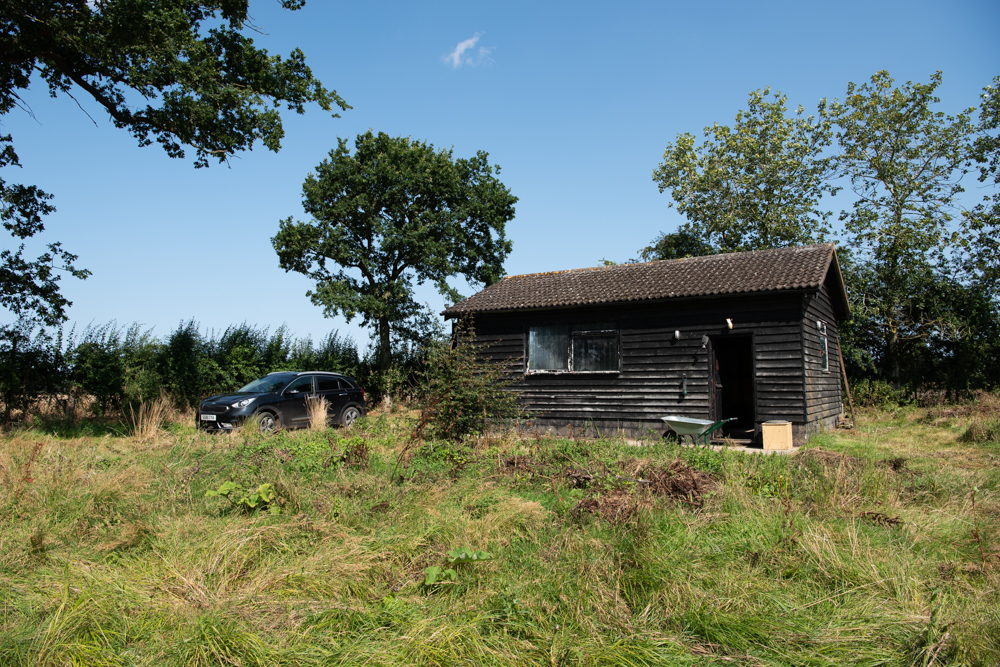
The building was a variant of Suffolk’s typical black barns. Historic maps showed that there had been a building on this site at least since 1895, but this particular incarnation was of much more recent date, made from a mixture of reclaimed and modern materials. The building housed abandoned objects and rusty tools and seemed to have recently been a dwelling place for a number of birds. The site was sold, as so many are, with recently gained planning permission to build a smallish home, shaped as an extension around two sides to the existing barn. We knew that we did not want to build the building that had been approved – it had a distinctly off the shelf feel. The materials were completely wrong for the area for a start.
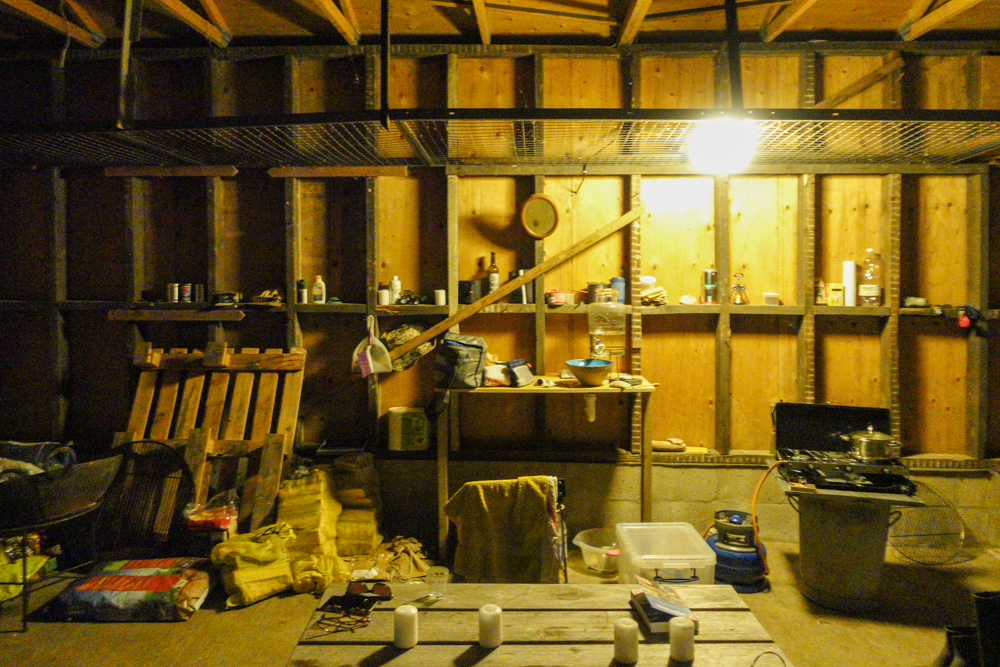
It was very clear when we bought the land that connection to services – mains water, drainage and electricity would be expensive and difficult, in fact prohibitive. Very quickly it was apparent that this would have to be an off-grid project. This would add to the complexity but also to the interest of the project. We contacted and then hired a firm of Architects who had experience of building in the area and had built an off-grid barn that had many similarities to our own requirements. They developed a design for a, looking back, quite grand building, probably twice or three times the size of the dwelling that had been approved for the site. They made the first planning application in March 2021.
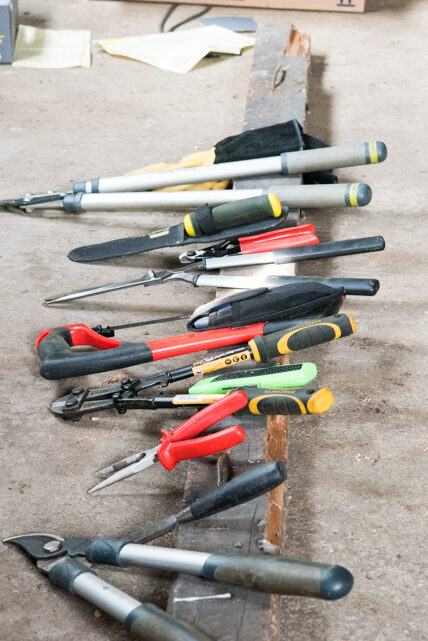
Strangely the land itself was surrounded by layers of peerless fence, chicken wire and metal posts with three lines of barbed wire sitting on top. The chicken wire was buried in the ground, presumably to keep out rabbits but the barbed wire seemed design to deter unwanted humans. It was satisfying to spend our first few visits to the site armed with bolt croppers, a large hacksaw and a crowbar removing all the barbed wire and much of the fence. It was a kind of teenage dream of sabotaging authority.
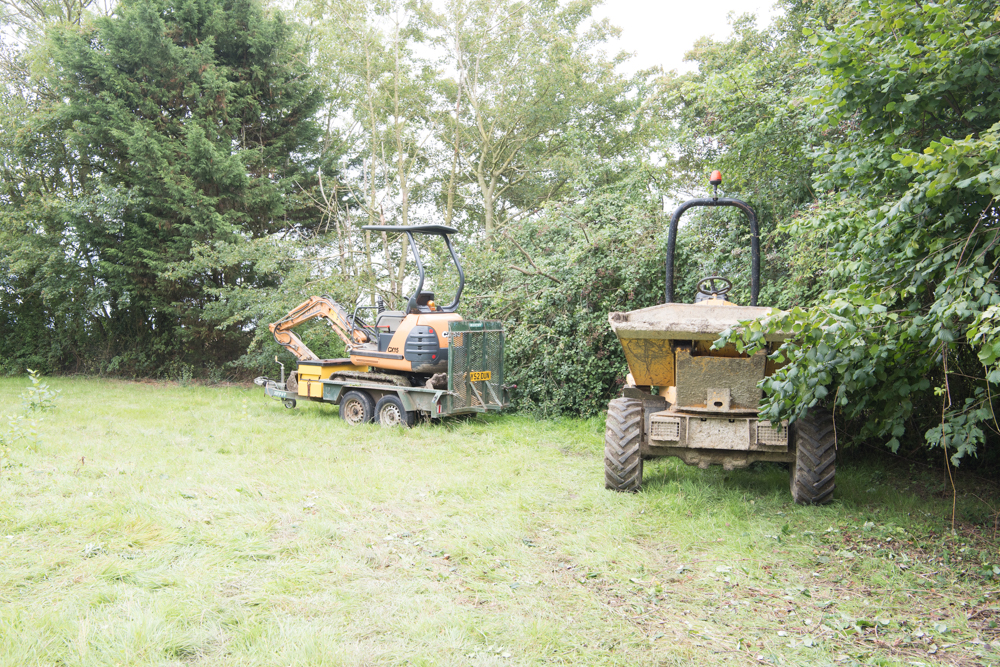
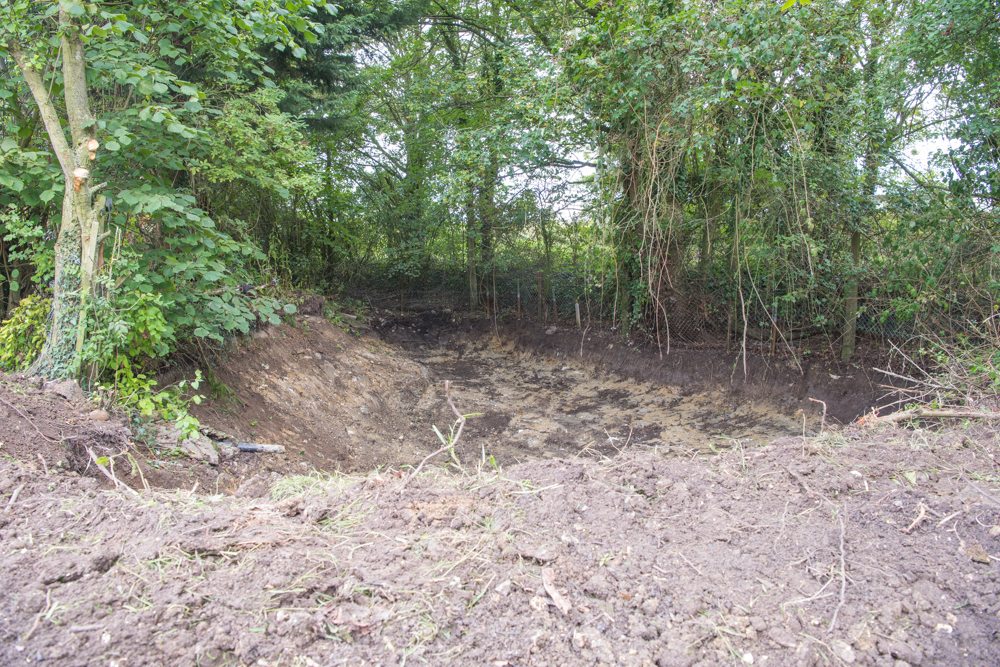
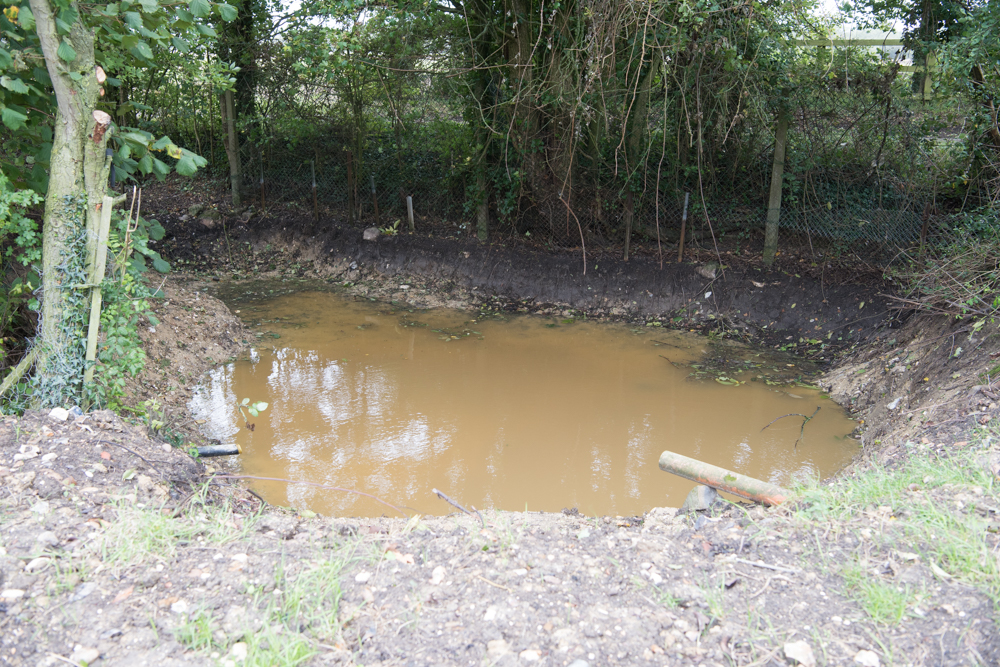
The land was not advertised as having a pond on it, but historic maps showed one. There was a silty dip close to the border by the roadway as its only remnant. We contacted a man with a digger who, in a day, along with a friend with a dump truck, dug out all the soil and weeds leaving us with a deep, clay-lined hollow which started to fill with rain water. We also found drainage pipes that had once drained into it and started draining again, though we do not know where they originate.
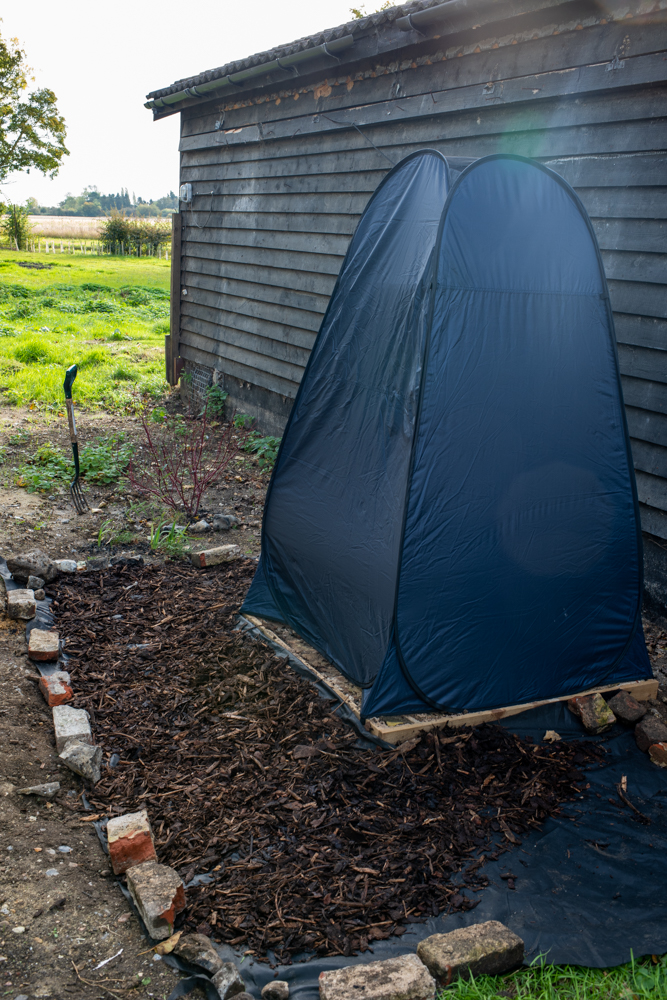
While we waited for the planning process we spent weekends pulling down vines and had two out-of-character fir trees cut down. We stayed in a local motel and a couple of times camped in a tent next to the barn.
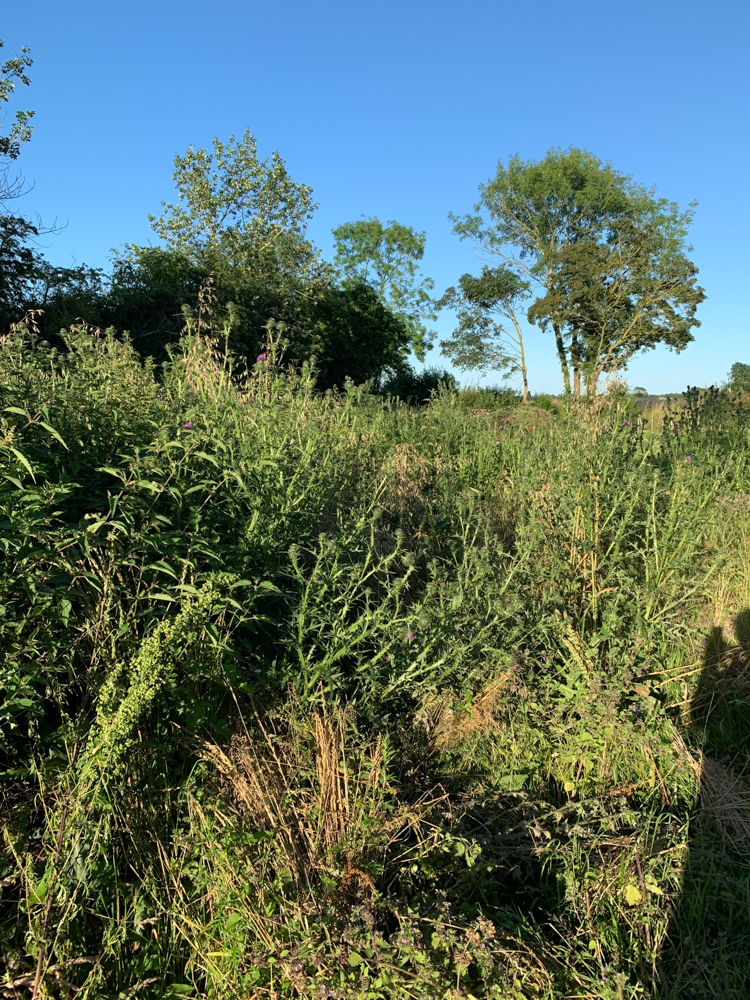
Our planning application was roundly refused. As one (of many) issues was closeness to a line of four mature oak trees along the border, we put in a second application in July 2021 with the building moved a few metres away from them. The long-game of the architect was to lodge an appeal and hopefully have the proposal accepted. The second application was rejected in September 2021 and we put in the appeal in November 2021. Meanwhile we spent visits doing further clearing and bought a large petrol mower and set about trying to keep the grass, along with vicious thistles and nettles under control. Once we neglected the site for six weeks over the summer and returned to find nettles and thistles above the height of my head.
The appeal timescale is much longer than a standard planning application and it was in August 2022 that we heard that we had been refused, meaning two years into the project we were back to square one. We hired a new architect and took a new, more modest approach which was to apply for non-material (or was it material?) amendments to the original plan that had been granted in 2020. The amended plan had the same footprint as the original plan but with different materials and a very different approach to the design – much more thoughtful. This was granted in April 2024. The Parish Council supported it this time and we had three supporting comments from local residents.
This approval was major turning point for morale, naturally. In terms of design approach there has been talk of retaining some of the structure, at least the concrete base, of the barn. The architect has staked out the position of the planned building – we did it in the pouring rain. At the moment we are beginning to meet with a range of consultants hired by the architect including, crucially, the consultant who will, we hope, be responsible for the whole off-grid design.